Telescope Magnification Explained: The Formula, Useful Limits and Real Numbers
By Indrek Eenmaa 9 min read Updated November 26, 2026
The numbers to remember
- Magnification = telescope focal length / eyepiece focal length.
- Celestron's highest useful power is 60x per inch of aperture; its lowest is 3.6x per inch.
- Tele Vue: no more detail appears beyond about 50x per inch.
- Average seeing limits most scopes to roughly 25x to 30x per inch.
- Tele Vue says the atmosphere usually caps planetary viewing near 300x.
- A 2x Barlow doubles the power of every eyepiece you own.
- Box claims like 525x on a 70 mm scope are far past its useful limit.
In this guide
- The telescope magnification formula
- Magnification table for four common telescopes
- Highest useful magnification: 50x or 60x per inch
- Why seeing caps magnification on most nights
- Lowest useful magnification and why it matters
- Barlow lenses: doubling your eyepieces
- Why "525x" on the box is a red flag
- Picking powers for a basic eyepiece set
Telescope magnification is the telescope’s focal length divided by the eyepiece’s focal length. A telescope with a 1200 mm focal length and a 25 mm eyepiece magnifies 48 times (48x); swap in a 10 mm eyepiece and it magnifies 120x. The telescope has no fixed power of its own. Every eyepiece you put in gives a different one.
What the formula does not tell you is how much power is actually useful. That depends on aperture, the diameter of the main lens or mirror, and on the air above you. Celestron puts the ceiling at 60x per inch of aperture, Tele Vue says no new detail shows past about 50x per inch, and on an ordinary night most telescopes top out near 25x to 30x per inch because of atmospheric turbulence. The tables below work all of this out for four common telescopes.
The telescope magnification formula
Tele Vue’s formula page gives magnification two ways, and both give the same answer:
- Magnification = telescope focal length / eyepiece focal length. Both numbers in millimeters. The telescope’s focal length is printed on the tube or in the manual (for example “D=130mm F=650mm”). The eyepiece’s focal length is printed on its barrel or top.
- Magnification = aperture / exit pupil. The exit pupil is the small disk of light the eyepiece projects toward your eye. This version matters when you are choosing low powers, which is covered in our guide to exit pupil.
The same page gives focal ratio as focal length divided by aperture. An f/5 telescope has a focal length five times its aperture. Focal ratio does not change how bright an image looks at a given magnification: Tele Vue states that telescopes of equal aperture at equal magnification give the same visual brightness, whatever their f-number. A short focal ratio just reaches any given power with a longer eyepiece.
Shorter eyepiece, higher power. That trips up a lot of beginners, because the bigger number on the eyepiece means the smaller image. A 25 mm eyepiece is the low-power one; a 10 mm is the high-power one. Our comparison of the 25mm vs 10mm telescope eyepiece goes through that common pair in detail.
Magnification table for four common telescopes
These four designs cover most first telescopes in the US. Focal lengths come from the makers’ spec pages: Celestron’s PowerSeeker 70EQ (70 mm, 700 mm, f/10), AstroMaster 130EQ (130 mm, 650 mm, f/5) and NexStar 6SE (150 mm, 1500 mm, f/10), and Sky-Watcher’s 8 inch Traditional Dobsonian (203 mm, 1200 mm, f/5.9).
| Eyepiece | 70 mm f/10 refractor (700 mm) | 130 mm f/5 reflector (650 mm) | 8 inch f/5.9 Dobsonian (1200 mm) | 6 inch f/10 SCT (1500 mm) |
|---|---|---|---|---|
| 32 mm | 22x | 20x | 38x | 47x |
| 25 mm | 28x | 26x | 48x | 60x |
| 20 mm | 35x | 33x | 60x | 75x |
| 15 mm | 47x | 43x | 80x | 100x |
| 10 mm | 70x | 65x | 120x | 150x |
| 6 mm | 117x | 108x | 200x | 250x |
| 10 mm + 2x Barlow | 140x | 130x | 240x | 300x |
Notice that the same 10 mm eyepiece gives 65x in the short 130 mm reflector and 150x in the long 6 inch SCT. That is why “a 10 mm eyepiece” says nothing about power until you know the telescope. The eyepiece calculator runs the same numbers for any scope and eyepiece set.
Highest useful magnification: 50x or 60x per inch
Aperture decides how much detail a telescope can resolve. Push the magnification beyond what that detail needs and you only enlarge the blur. Celestron’s eyepiece guide calls this the point where the image “will be magnified but will not carry or enhance any more details.” Three sources put numbers on it, and they differ:
- Celestron: 60x per inch (per 25.4 mm) of aperture. Its own spec sheets use this, for example 307x for the 130 mm AstroMaster 130EQ.
- Sky-Watcher: about 50x per inch (2x per mm) “under good conditions,” adding that 3x per mm or more is sometimes quoted but needs conditions that are very rare.
- Tele Vue treats the 50x per inch rule as a half-truth: small telescopes little affected by the air can give pleasing images up to 100x per inch, but no more detail appears than at 50x per inch. Large telescopes, more affected by seeing, may top out at 20x or 30x per inch.
The difference between 50x and 60x is not a disagreement about optics. It is a judgment about how much “empty” magnification is worth having for comfort, since a slightly larger image can be easier on the eye even with no new detail. Treat 50x per inch as the point where detail stops growing and 60x per inch as the practical maximum worth buying an eyepiece for.
| Telescope | Aperture | Lowest useful (Celestron, 3.6x/in) | Average night (25x to 30x/in) | Detail limit (50x/in) | Highest useful (Celestron, 60x/in) | Dawes limit |
|---|---|---|---|---|---|---|
| 70 mm f/10 refractor | 2.8 in | 10x | 69x to 83x | 138x | 165x | 1.65″ |
| 130 mm f/5 reflector | 5.1 in | 19x | 128x to 154x | 256x | 307x | 0.89″ |
| 6 inch f/10 SCT | 5.9 in | 21x | 148x to 177x | 295x | 354x | 0.77″ |
| 8 inch f/5.9 Dobsonian | 8.0 in | 29x | 200x to 240x | 400x | 480x | 0.57″ |
The lowest and highest Celestron figures match what Celestron prints on its spec sheets for these models; for the 8 inch row, the comparison is Celestron’s own StarSense Explorer 8 inch Dobsonian, which has the same 203 mm aperture and 1200 mm focal length. The Dawes limit, the closest pair of equal stars a telescope can split, is Tele Vue’s formula: 4.56 arcseconds divided by the aperture in inches.
Why seeing caps magnification on most nights
Starlight passes through miles of moving air before it reaches your telescope. Pockets of warmer and cooler air bend it slightly differently, so stars twinkle and planets shimmer and boil at high power. Astronomers call the steadiness of the air “seeing,” and it has nothing to do with how clear or dark the sky is. A crystal-clear winter night can have terrible seeing.
Astronomics, a long-running US telescope dealer, puts it plainly: turbulence limits most telescopes to 25x or 30x per inch of aperture on an average night, and the 50x to 60x per inch figures apply only under ideal seeing, which is rare. Tele Vue’s eyepiece guide gives an absolute version of the same idea: the atmosphere will usually limit planetary observing to about 300x, whatever the aperture.
So an 8 inch Dobsonian “can” use 400x to 480x, but on a typical night something like 200x to 240x will look sharper. Large telescopes hit the seeing ceiling first, because they look through a wider column of turbulent air. A practical routine: start at medium power, step up one eyepiece at a time, and stop as soon as the view looks softer instead of bigger. On some nights that happens at 120x.
Other things also limit power: a telescope that has not cooled to outdoor temperature, a mirror out of collimation, a wobbly mount, or heat rising off a roof or driveway. If high power is always mushy, check those before blaming the eyepiece. If you see nothing at all, our guide for when you only see black through a telescope covers the usual causes, and starting at high power is one of them.
Lowest useful magnification and why it matters
At the other end, Celestron sets the lowest useful magnification at 3.6x per inch of aperture. At that power the exit pupil is about 7 mm, roughly the widest a young, dark-adapted eye opens. Go lower and the beam of light leaving the eyepiece gets wider than your pupil, so some of the light the telescope gathered never reaches your eye.
Tele Vue disputes treating 7 mm as a hard rule. With a refractor there is no real limit on useful exit pupil size; with a reflector the limit arrives when the shadow of the secondary mirror becomes noticeable in the view. Tele Vue also notes that a 7 mm exit pupil gives the brightest deep-sky views but not necessarily the best ones, since a bit more power darkens the background and shows fainter stars.
Low power is where you find things. It gives the widest view of the sky, so start every object hunt with your longest eyepiece, center the target, then switch up. How much sky each eyepiece shows is covered in the guide to telescope field of view.
Barlow lenses: doubling your eyepieces
A Barlow lens is a short tube with a negative lens that slides in ahead of the eyepiece and multiplies the telescope’s effective focal length. A 2x Barlow doubles the power of every eyepiece; a 3x triples it. With a 2x Barlow, a 25 mm and a 10 mm eyepiece in an 8 inch f/5.9 Dobsonian give four powers: 48x, 96x, 120x and 240x.
Tele Vue says modern, well-designed Barlows can improve eyepiece performance at the edge of the field, and they let you reach high power with a longer eyepiece that is more comfortable to look through. The catch is redundancy: a 2x Barlow with a 20 mm eyepiece duplicates a 10 mm eyepiece. Plan the set so the Barlowed powers fall between your other eyepieces, not on top of them. Celestron’s own example: its Omni 4 mm eyepiece with a 2x Barlow in the AstroMaster 130EQ gives 325x, which already exceeds that scope’s 307x useful limit.
Why “525x” on the box is a red flag
The power printed on a cheap telescope box is the highest number its included parts can produce. Celestron’s PowerSeeker 70EQ is a clear example: 700 mm focal length, a 4 mm eyepiece (175x) and a 3x Barlow lens, so 700 / 4 x 3 = 525x. Celestron’s own spec sheet for the same scope lists the highest useful magnification as 165x and the lowest as 10x.
Astronomics warns about the same pattern: budget scopes often ship with a Barlow and claims of up to 675x, and those powers produce dim, blurry “empty magnification.” Sky-Watcher makes the same point about 600x claims on small telescopes, saying they mostly magnify the turbulence in the air.
When you compare telescopes, ignore the maximum power. Compare aperture, mount steadiness and the eyepieces included. Aperture is what raises every useful limit in the tables above, which is why the jump from a 6 inch vs 8 inch telescope matters far more than any number on the box.
Picking powers for a basic eyepiece set
A simple way to build a set is to work from the useful limits for your aperture:
- Low power, finding and wide views: near the lowest useful power, or the longest 1.25 inch eyepiece your focuser takes. In an 8 inch f/5.9 Dob, a 32 mm gives 38x.
- Medium power, most deep-sky objects: roughly 10x to 15x per inch. For the same Dob that is 80x to 120x, a 15 mm to 10 mm eyepiece.
- High power, Moon, planets and double stars: Tele Vue suggests at least 150x for planetary and double-star work. In the 8 inch Dob a 6 mm gives 200x; in a 70 mm refractor, aim for 100x to 140x instead.
- Maximum: one step near 50x per inch for the best nights. You will not use it often.
Then fill gaps with a Barlow rather than buying many close focal lengths. Write the powers down for your own telescope before you shop, because the same eyepiece does a different job in each scope.
Questions people ask
What is the telescope magnification formula?
Divide the telescope's focal length by the eyepiece's focal length, both in millimeters. A 650 mm reflector with a 10 mm eyepiece gives 65x; the same eyepiece in a 1500 mm Schmidt-Cassegrain gives 150x. Add a Barlow lens and multiply the result by its factor, so a 2x Barlow turns 65x into 130x. Aperture does not appear in the formula, but it decides how much of that power is useful.
How much magnification do I need to see planets?
Saturn's rings and Jupiter's cloud belts show at 50x to 100x, which is the range Astronomics gives for lunar and planetary detail. Tele Vue suggests having an eyepiece that reaches at least 150x for planets and double stars. Past roughly 200x to 250x, steady air matters more than the eyepiece, and Tele Vue notes the atmosphere usually limits planetary viewing to about 300x.
Is higher magnification better on a telescope?
No. Above the useful limit the image gets bigger, dimmer and softer without showing more detail, which Celestron describes as magnifying the turbulence in the atmosphere. Most deep-sky objects look best at low to medium power, and many galaxies and clusters are too large for high power anyway. Pick the power that suits the object and the night, then go up only while the view keeps improving.
What does 525 power mean on a telescope box?
It is the highest number the included parts can reach, not a useful power. Celestron's PowerSeeker 70EQ, for example, has a 700 mm focal length and ships with a 4 mm eyepiece and a 3x Barlow: 700 / 4 x 3 = 525x. Celestron's own spec sheet for the same scope lists the highest useful magnification as 165x, under a third of that.
What is the lowest useful magnification for my telescope?
Celestron uses 3.6x per inch of aperture, which gives an exit pupil of about 7 mm, the widest a dark-adapted young eye opens. For an 8 inch telescope that is about 29x. Below that, part of the light misses your pupil. Tele Vue adds that refractors have no strict lower limit, while reflectors start to show the secondary mirror's shadow.
Keep observing
Read next
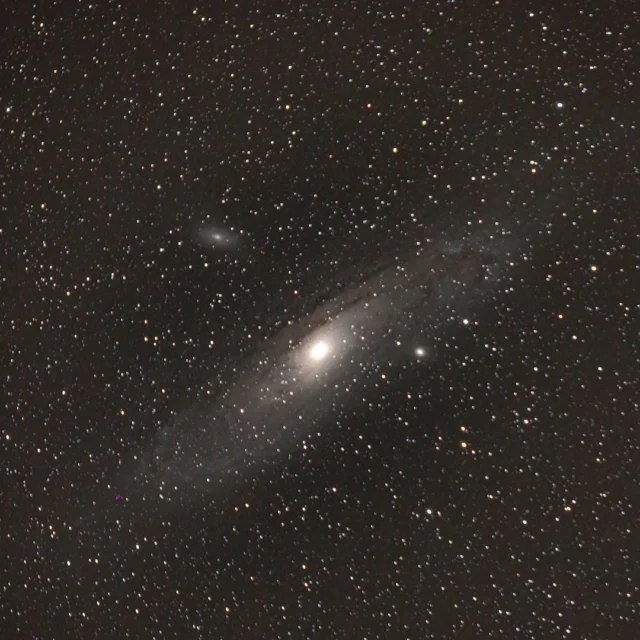
Telescope Field of View: True vs Apparent Field, Formulas and How Much Sky Fits
A telescope's true field of view is the patch of sky you see, in degrees. The accurate formula is 57.3 times the eyepiece's field…
Nov 26, 2026 · 7 min
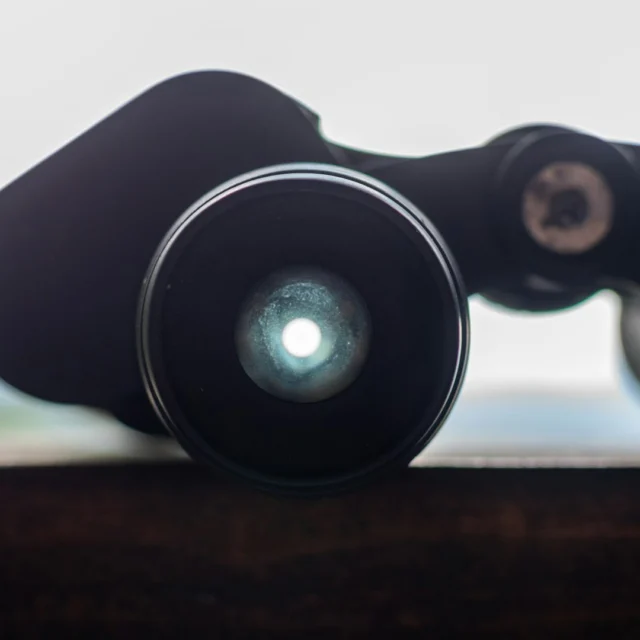
Exit Pupil Explained: Formula, the 7 mm Limit and the Right Size for Each Target
Exit pupil is the diameter of the beam of light that leaves an eyepiece or binocular and enters your eye. Work it out as…
Nov 26, 2026 · 7 min
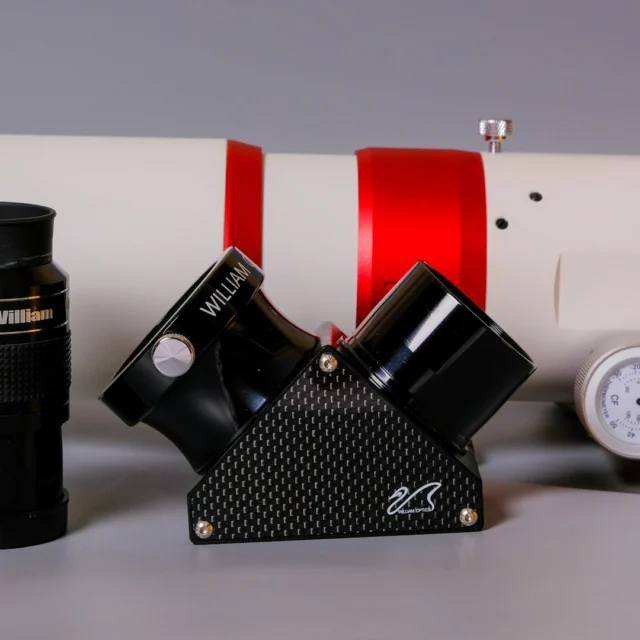
25mm vs 10mm Telescope Eyepiece: Which Is Stronger and When to Use Each
The 10mm eyepiece is the stronger one: it gives 2.5 times the magnification of the 25mm in any telescope. In a 1000 mm scope…
Nov 26, 2026 · 7 min