Bortle Scale Explained: The Nine Classes of Night Sky Darkness
By Indrek Eenmaa 7 min read Updated November 26, 2026
The numbers to remember
- The scale runs from Class 1 (darkest) to Class 9 (inner city).
- Bortle's naked-eye limits range from 7.6 to 8.0 in Class 1 to 4.0 or less in Class 9.
- The NPS calls a naked-eye limit of 7.4 about the faintest attainable.
- Bortle judged skies by the Milky Way, zodiacal light, M33 and lit clouds, not only star counts.
- Light pollution dims galaxies and nebulae more than stars.
- Natural Bridges in Utah became the first International Dark Sky Park in 2007.
In this guide
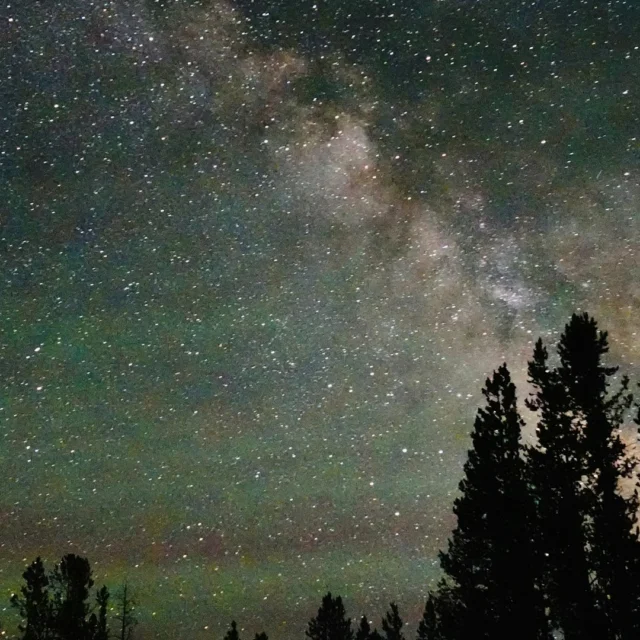
The Bortle scale rates the darkness of a night sky in nine classes, from Class 1, a pristine site far from any artificial light, to Class 9, the sky over a downtown core. Amateur astronomer John E. Bortle published it in the February 2001 issue of Sky & Telescope to give observers a common way to compare sites. Each class is defined by what you can see: the naked-eye star limit, how much structure the Milky Way shows, whether the zodiacal light and faint galaxies are visible, and whether clouds look dark or glow.
Bortle built the scale because star counts alone mislead. In his article he pointed out that the faintest star a person can see depends heavily on eyesight and effort, so one observer’s 5.5 magnitude sky is another’s 6.3. He also noted that a modest amount of light pollution degrades diffuse objects such as galaxies and nebulae far more than stars, which is why his classes lean on those objects.
The nine Bortle classes in plain words
The naked-eye limiting magnitude (NELM) and the telescope limit come from Bortle’s original article. His telescope figures are for a 32 cm, or 12.5 inch, reflector. Higher magnitude numbers mean fainter stars.
| Class | Bortle’s name | Naked-eye limit | 32 cm scope limit | What you notice |
|---|---|---|---|---|
| 1 | Excellent dark-sky site | 7.6 to 8.0 with effort | 17.5 with effort | Zodiacal light striking, gegenschein visible, Milky Way casts shadows, M33 obvious, your gear nearly invisible around you |
| 2 | Typical truly dark site | 7.1 to 7.5 | 16 to 17 | Summer Milky Way richly structured, M33 easy, clouds show only as black holes in the stars |
| 3 | Rural sky | 6.6 to 7.0 | 16 | Some glow on the horizon, clouds faintly lit low down but dark overhead, several globular clusters visible to the eye |
| 4 | Rural/suburban transition | 6.1 to 6.5 | 15.5 | Light domes over towns in several directions, Milky Way impressive overhead but with little structure, M33 hard |
| 5 | Suburban sky | 5.6 to 6.0 | 14.5 to 15 | Milky Way weak or gone near the horizon and washed out overhead, clouds brighter than the sky |
| 6 | Bright suburban sky | about 5.5 | 14.0 to 14.5 | No zodiacal light, Milky Way only near the zenith, gray-white glow up to 35 degrees above the horizon |
| 7 | Suburban/urban transition | about 5.0 with effort | barely 14 | Whole sky grayish white, Milky Way invisible or nearly, clouds brilliantly lit |
| 8 | City sky | 4.5 at best | about 13 | Sky gray or orange, light enough to read headlines, some constellation stars missing |
| 9 | Inner-city sky | 4.0 or less | not given | Sky bright even overhead, faint constellations such as Cancer and Pisces gone |
Bortle also gave a key test object for the boundary between dark and compromised skies. The Triangulum Galaxy, M33, should be visible to a fully dark-adapted observer in Class 4 or better. In Class 4 it is a difficult averted-vision target that shows only when it is high, in Class 6 it needs binoculars, and the Andromeda Galaxy, M31, fades from only modestly apparent in Class 6 to barely glimpsed in Class 8.
Naked-eye limits: Bortle vs the National Park Service
The NPS Night Sky Program uses naked-eye limiting magnitude as one of its sky quality measures, and its benchmarks are a little more conservative than Bortle’s top classes.
| Naked-eye limit | NPS description |
|---|---|
| 7.4 | Excellent, about the faintest attainable |
| 7.0 | Achievable with good seeing and proper dark adaptation |
| 6.6 | Near pristine under average conditions |
| below 6.3 | Usually indicates degraded sky quality |
The two sources disagree at the very top. Bortle gives 7.6 to 8.0 for Class 1 with effort, while the NPS calls 7.4 just about the faintest attainable. Both can be right in their own terms: Bortle describes what experienced observers report under the best skies with sustained effort, and the NPS sets measurement benchmarks for its staff and parks. For practical purposes, a sky where you can see stars of magnitude 6.6 or fainter is a dark one, and anything under 6.3 means light pollution is affecting what you see.
The NPS also measures sky brightness with instruments. It treats 22.0 magnitudes per square arcsecond at the zenith as representing the darkest part of pristine skies, and notes that the handheld Sky Quality Meter does not measure reliably when the sky is darker than 21.5. Bortle’s article gives no meter readings, so the SQM-to-Bortle conversion charts found online are other people’s estimates, not part of his scale.
How to estimate your own Bortle class
- Start with a map. Light pollution maps show modeled sky brightness for any location, which tells you roughly what to expect and where the nearest darker sites are. Treat the result as an estimate; local terrain, trees and nearby lights change what you actually see.
- Choose a fair night. Go out when the Moon is down and astronomical twilight has ended, on a clear night without haze. The best moon phase for stargazing explains how to find those hours.
- Adapt your eyes. Stay away from white light, use a dim red light, and give your eyes time. NPS park pages advise at least 20 to 30 minutes, and note that a flash of white light from a flashlight, phone or headlight costs several minutes of readjustment.
- Check Bortle’s markers. Look for the Milky Way and how far down toward the horizon it reaches, the glow of towns on the horizon, whether clouds look dark or lit, and whether M31 and M33 are visible.
- Judge by the faintest class you fully match. Most sites fit one class overhead and a brighter one toward the nearest city, so rate the sky high up and note the worst direction separately.
Bortle warned that most observers today have never seen a truly dark sky, so they lack a reference and tend to rate their sites too dark. He wrote that dark skies once found within an hour of major cities now often require a trip of 150 miles or more. If you have never seen the Milky Way cast a shadow or watched clouds appear as black holes in the stars, you are probably not under a Class 1 or 2 sky.
What each class means for a telescope
A telescope cannot remove skyglow; it magnifies the sky background along with the target. What it can do is gather more light from point sources, which is why stars and planets survive light pollution far better than galaxies.
| Classes | What works well | What suffers |
|---|---|---|
| 1 to 3 | Everything: faint galaxies, large dim nebulae, galaxy structure, comet tails, the zodiacal light | Very little |
| 4 | Most Messier and brighter NGC objects, Milky Way star fields | Large, low-surface-brightness galaxies and nebulae |
| 5 to 6 | Moon, planets, double stars, clusters, bright nebulae such as M42, brighter galaxies | Faint galaxies, galaxy detail, the Milky Way |
| 7 to 8 | Moon, planets, double stars, bright clusters | Bortle notes even the brightest Messier objects look like pale ghosts in Class 7 |
| 9 | Moon, planets and a few of the brightest star clusters | Almost all deep-sky observing |
Aperture still helps under every sky. Tele Vue’s light-grasp formula shows why: each step up in mirror size adds faint-star reach, and the gap between apertures stays about the same wherever you observe. A dark sky helps more than a bigger telescope, though. Bortle’s own figures show the same 32 cm reflector reaching about magnitude 13 under a city sky and 16 under a rural one, a three-magnitude difference no reasonable aperture upgrade can match. For what each size shows, see what you can see with a 6, 8, 10 and 12 inch Dobsonian and the 6 inch vs 8 inch telescope comparison.
Two practical points for suburban observers. First, use moderate magnification on galaxies and nebulae: a smaller exit pupil darkens the sky background and can improve contrast on small, bright objects. Second, shield your eyes from direct lights; a dark cloth over your head or an eyepiece hood keeps stray light out of your eye at a backyard site.
Dark sky places in the US
DarkSky International, formerly the International Dark-Sky Association, certifies parks, reserves and communities that protect their night skies. Some well-documented US examples:
- Natural Bridges National Monument, Utah. The first International Dark Sky Park, designated in 2007. In the NPS announcement, a U.S. Naval Observatory astronomer on the association’s board called it the only Bortle Class 2 sky documented in the Park Service’s night sky surveys.
- Big Bend National Park, Texas. The NPS says Big Bend has the darkest night skies of any national park in the lower 48 states, crediting the finding to its Natural Sounds and Night Skies Division. It became an International Dark Sky Park in 2012.
- Cherry Springs State Park, Pennsylvania. The best-known dark site in the East. Pennsylvania’s DCNR declared it the state’s first dark sky park in 2000, and it received Gold Level International Dark Sky Park status in 2008.
Many western national parks run ranger-led astronomy programs, and the darkest skies in the lower 48 cluster in the Southwest and the interior West. If you plan a trip, check the park’s own stargazing page for current programs, road conditions at night and any rules about lights and pets on observing fields.
Common Bortle scale mistakes
- Rating on a moonlit or hazy night. Moonlight and haze brighten the whole sky and make any site rate worse than it is. Rate only on moonless, clear nights.
- Rating before full dark adaptation. Your eyes keep gaining sensitivity for the first 20 to 30 minutes in the dark, so an early rating comes out too bright.
- Rating by the zenith alone. A site can be Class 3 overhead and Class 6 toward a city. Record both.
- Treating a map as a measurement. Maps are modeled from satellite data and show averages; check them against what your eyes see.
The most useful single habit is to note the Bortle class every time you observe, along with what you could and could not see. After a few months you will know exactly which targets your backyard allows and which ones are worth the drive to a darker site.
Questions people ask
What Bortle scale is my location?
Online light pollution maps give a modeled estimate for any spot, and they are a good starting point. To rate your own sky, go out on a clear, moonless night after astronomical twilight, let your eyes adapt for at least 20 to 30 minutes, and compare what you see with Bortle's markers: how much of the Milky Way shows, whether the Andromeda Galaxy or M33 is visible, and whether clouds look dark or lit from below.
What is a good Bortle scale for stargazing?
Class 4 or darker is good for deep-sky observing: the Milky Way still looks impressive overhead and M33 is a difficult naked-eye object. Classes 1 to 3 are excellent and usually mean a trip to a remote rural area or a dark sky park. Classes 5 to 6 still work well for the Moon, planets, double stars and bright clusters, and with a telescope for the brighter galaxies and nebulae.
Where can I find Bortle 1 or 2 skies in the US?
Truly dark skies are mostly in the interior West: southern Utah, Nevada, Arizona, New Mexico, West Texas, Wyoming and Montana, plus remote spots elsewhere. The NPS says Big Bend has the darkest skies of any national park in the lower 48 states, and a U.S. Naval Observatory astronomer described Natural Bridges in Utah as a Bortle Class 2 sky when it became the first International Dark Sky Park in 2007.
Can you see the Milky Way in Bortle 5?
Partly. Bortle describes a Class 5 suburban sky as one where the Milky Way is very weak or invisible near the horizon and looks washed out overhead. On a clear, moonless night you can usually trace its brightest parts high in the sky, especially the summer Milky Way, but the structure seen from darker sites is gone. In Class 6 it shows only near the zenith, and in Class 7 it is invisible or nearly so.
Is the Bortle scale the same as an SQM reading?
No. An SQM meter measures sky brightness in magnitudes per square arcsecond, while the Bortle scale is a descriptive rating based on what the eye sees. The NPS treats 22.0 magnitudes per square arcsecond at the zenith as pristine and notes that SQM meters become unreliable in skies darker than 21.5. Bortle's article gives no SQM values, so conversion tables found online are approximations.
Keep observing
Read next
10×50 vs 15×70 Binoculars for Astronomy: Which Should You Buy?
15x70 binoculars collect about twice the light of 10x50s and magnify 1.5 times more, so they show fainter stars and clusters and a larger…
Nov 26, 2026 · 7 min
Best Moon Phase for Stargazing: New Moon, Quarters and Moonrise Timing
The best moon phase for stargazing is the new moon and the days around it, when the Moon is either absent or a thin…
Nov 26, 2026 · 8 min
25mm vs 10mm Telescope Eyepiece: Which Is Stronger and When to Use Each
The 10mm eyepiece is the stronger one: it gives 2.5 times the magnification of the 25mm in any telescope. In a 1000 mm scope…
Nov 26, 2026 · 7 min