Best Moon Phase for Stargazing: New Moon, Quarters and Moonrise Timing
By Indrek Eenmaa 8 min read Updated November 26, 2026
The numbers to remember
- New moon week gives the darkest skies; full moon week is the brightest.
- A first quarter Moon sets around the middle of the night, so mornings are dark.
- A last quarter Moon rises around the middle of the night, so evenings are dark.
- The Moon rises on average about 50 minutes later each day.
- Full darkness starts when the Sun is 18 degrees below the horizon (USNO).
- Moonlight hides the Milky Way and faint galaxies, not planets or double stars.
- The next new moons for US observers: December 8, 2026 and January 7, 2027.
In this guide
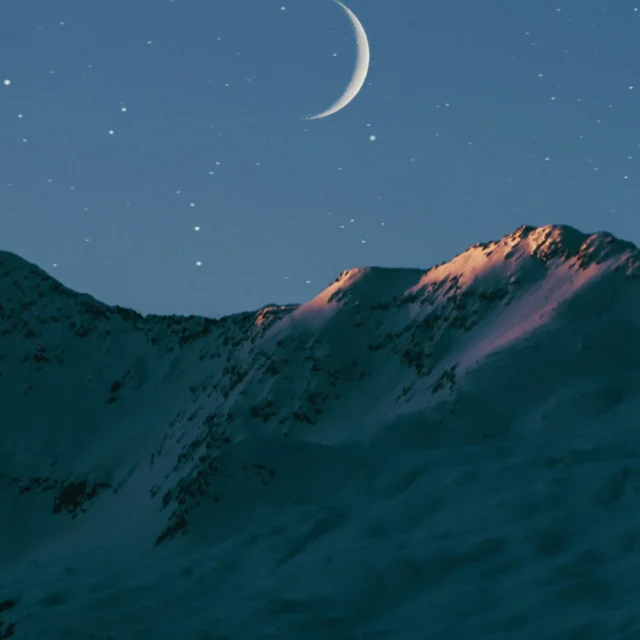
The best moon phase for stargazing is the new moon and the few nights on either side of it. At new moon the Moon rises and sets with the Sun, so the night sky is free of moonlight from the end of twilight until dawn. The Milky Way, faint galaxies and nebulae and meteor showers all look their best then. Around full moon the opposite is true: the Moon is up all night and its light washes out everything faint.
The useful window is wider than one night. From last quarter to new moon, the Moon rises after midnight or in the early morning, so evenings are dark. From new moon to first quarter, it sets in the evening, so the rest of the night is dark. The National Park Service’s stargazing advice at Black Canyon of the Gunnison sums it up: the best time to view the Milky Way is during the new moon phase, or when the Moon rises late in the night.
When the Moon is up in each phase
What matters for stargazing is not the phase name but whether the Moon is above the horizon during the hours you are outside. NASA’s description of rise and set times by phase is the key to planning.
| Phase | Rises | Sets | Dark hours after twilight |
|---|---|---|---|
| New moon | With the Sun | With the Sun | All night |
| Waxing crescent | Morning, after sunrise | Evening, after dark | Most of the night, once it sets |
| First quarter | Around midday | Around the middle of the night | After it sets, until dawn |
| Waxing gibbous | Afternoon | Before dawn | Little or none |
| Full moon | At sunset | At sunrise | None |
| Waning gibbous | After sunset | After sunrise | Early evening only |
| Last (third) quarter | Around the middle of the night | Around midday | Evening, until it rises |
| Waning crescent | Early morning, before sunrise | Afternoon | Most of the night, until it rises |
NASA gives the full cycle as about 29.5 days. “Around the middle of the night” is approximate: actual rise and set times shift with your latitude, the season and the Moon’s tilted orbit, which is why rise and set times for your own location beat any rule of thumb.
How moonrise moves each night
The Moon moves about 13 degrees east against the stars each day, since it circles the sky in about 27.3 days. Earth has to turn a little extra to bring it back above the horizon, so on average it rises about 50 minutes later each day. The real gap varies a lot: in some seasons the Moon rises only 20 or 30 minutes later on successive nights, in others more than an hour.
Here is what that looks like in practice, using U.S. Naval Observatory data for Denver in December 2026 (Mountain Standard Time). Astronomical twilight ends there about 1 hour 40 minutes after sunset, near 6:20 p.m. that month.
| Date | Phase and lit fraction | Moon above the horizon | Dark evening? |
|---|---|---|---|
| Dec 9 | Waxing crescent, 1% | Sets 4:55 p.m. | Dark all night |
| Dec 12 | Waxing crescent, 12% | Sets 7:52 p.m. | Dark from about 8 p.m. |
| Dec 16 | Near first quarter, 46% | Rises 11:43 a.m., sets around midnight | Dark only after moonset |
| Dec 20 | Waxing gibbous, 85% | Rises 1:29 p.m., sets 3:26 a.m. | Bright most of the night |
| Dec 24 | Full, 99% | Rises 5:29 p.m. | Bright all night |
| Dec 28 | Waning gibbous, 71% | Rises 10:35 p.m. | Dark until about 10:30 p.m. |
That single month shows the pattern. The first two weeks of December 2026 give dark evenings, the days around Christmas give almost none, and the evenings get dark again as the Moon wanes toward last quarter.
When the sky is actually dark: astronomical twilight
Even with no Moon, the sky is not fully dark at sunset. The U.S. Naval Observatory defines three stages of twilight by how far the Sun’s center is below the horizon: 6 degrees ends civil twilight, 12 degrees nautical and 18 degrees astronomical. Once astronomical twilight ends, USNO says scattered sunlight is less than the light from starlight and other natural sources, so the sky is as dark as it will get.
The time it takes depends on latitude and season. These figures are worked out from USNO’s 18 degree definition for the time from sunset to the end of astronomical twilight.
| Latitude (example) | March and September | June solstice | December solstice |
|---|---|---|---|
| 30°N (Houston, Jacksonville) | about 80 min | about 97 min | about 86 min |
| 35°N (Albuquerque, Memphis) | about 85 min | about 107 min | about 91 min |
| 40°N (Denver, Philadelphia) | about 91 min | about 123 min | about 98 min |
| 45°N (Minneapolis, Portland, Oregon) | about 99 min | about 153 min | about 107 min |
| 48°N (Seattle) | about 105 min | about 199 min | about 114 min |
North of about 48.5 degrees, around the northern borders of Washington, Montana, North Dakota and Minnesota, the Sun never gets 18 degrees below the horizon for a few weeks around the June solstice, so the sky never becomes fully dark. Summer stargazers in the far north get faint twilight all night even at new moon.
What moonlight washes out and what it does not
Moonlight brightens the whole sky, which hides objects that are only slightly brighter than the background. Bright, small targets are barely affected. NPS guidance puts it plainly: if the full Moon is up, the Milky Way will be hard to see.
| Target | Bright Moon | Best phase |
|---|---|---|
| Milky Way | Washed out by a gibbous or full Moon | New moon week, summer and fall evenings |
| Galaxies and faint nebulae | Fade badly or disappear | New moon week |
| Meteor showers | Most faint meteors lost | Peaks within a few days of new moon |
| Comets with faint tails | Tails shrink or vanish | New moon week |
| Bright star clusters | Still good, fewer faint members | Any phase |
| Planets | Unaffected | Any phase |
| Double stars and bright stars | Unaffected | Any phase |
| The Moon itself | Flat-looking at full | Crescents and quarters, along the shadow line |
New moon week is the time to go after the faint targets listed in what you can see with a 6, 8, 10 and 12 inch Dobsonian. Bright-Moon weeks are a good time for a telescope owner to work on planets, double stars and the Moon. The Moon is most dramatic in a telescope near first and last quarter, when shadows along the terminator, the line between day and night, make craters and mountains stand out. At full moon the Sun shines straight down on the lunar surface and the view looks flat. For planets, see how much magnification you need for Saturn; for the Moon, the telescope magnification guide shows which eyepieces frame the whole disk.
The Moon also matters less in a light-polluted sky. From a city, artificial skyglow already hides the Milky Way, so the difference between new moon and quarter moon is smaller than it is at a dark site. The darker your sky on the Bortle scale, the more the Moon’s phase decides what you see.
Next new moons for US observers
New moon dates below are from the U.S. Naval Observatory’s phase tables, converted from Universal Time to Eastern Time. Because new moon happens at a single instant worldwide, the US date can be one day earlier than the UT date. The good nights are the new moon date and two or three nights on either side.
| New moon (US Eastern date) | Eastern Time | Pacific Time |
|---|---|---|
| December 8, 2026 | 7:52 p.m. EST | 4:52 p.m. PST |
| January 7, 2027 | 3:24 p.m. EST | 12:24 p.m. PST |
| February 6, 2027 | 10:56 a.m. EST | 7:56 a.m. PST |
| March 8, 2027 | 4:29 a.m. EST | 1:29 a.m. PST |
| April 6, 2027 | 7:51 p.m. EDT | 4:51 p.m. PDT |
| May 6, 2027 | 6:58 a.m. EDT | 3:58 a.m. PDT |
| June 4, 2027 | 3:40 p.m. EDT | 12:40 p.m. PDT |
| July 3, 2027 | 11:02 p.m. EDT | 8:02 p.m. PDT |
| August 2, 2027 | 6:05 a.m. EDT | 3:05 a.m. PDT |
| August 31, 2027 | 1:41 p.m. EDT | 10:41 a.m. PDT |
| September 29, 2027 | 10:36 p.m. EDT | 7:36 p.m. PDT |
| October 29, 2027 | 9:36 a.m. EDT | 6:36 a.m. PDT |
| November 27, 2027 | 10:24 p.m. EST | 7:24 p.m. PST |
| December 27, 2027 | 3:12 p.m. EST | 12:12 p.m. PST |
For the Milky Way’s bright core, the new moons from May through August are the ones to circle, since NPS notes the Milky Way is brightest in summer, when the night side of Earth faces the center of the galaxy. Winter new moons are better for the Orion Nebula, the Pleiades and the winter star clusters. A pair of binoculars is the best tool for sweeping the Milky Way on those nights, and the 10×50 vs 15×70 binocular comparison covers which size to use.
Meteor showers and the Moon
Moonlight hurts meteor watching more than almost any other kind of observing, because most meteors are faint. The American Meteor Society calendar lists the Moon’s illumination for each peak. For the next year:
- Geminids, December 13 to 14, 2026: Moon about 15 to 20 percent lit, a waxing crescent that sets in the evening. A good year for the shower the AMS calls usually the strongest of the year.
- Quadrantids, January 3 to 4, 2027: Moon 18 percent, a waning crescent that rises before dawn.
- Lyrids, April 21 to 22, 2027: the Moon is full on April 20 and still nearly full at the peak, which the International Meteor Organization’s 2027 calendar expects on the night of April 22 to 23 for US observers, so expect heavy interference.
- Eta Aquariids, May 5 to 6, 2027: Moon 2 percent, nearly ideal, though rates are lower from the northern hemisphere.
- Perseids, August 12 to 13, 2027: Moon 79 percent, a waxing gibbous. Watch after it sets in the early morning hours.
How to plan a dark night
- Pick the week around a new moon, or a night when the Moon rises late or sets early.
- Look up the end of astronomical twilight and the moonrise or moonset for your exact location; the USNO publishes both.
- Your dark window runs from the later of twilight’s end and moonset to the earlier of moonrise and the start of morning twilight.
- Check the forecast for cloud cover and, for telescopes, steady air.
- Give your eyes time to adapt and use a red light, as NPS recommends, so you do not reset your night vision.
If weather spoils the new moon week, do not wait a month. A crescent Moon sets early in the evening and a last quarter Moon rises late, and either leaves several dark hours that are almost as good as new moon itself.
Questions people ask
Is a new moon good for stargazing?
Yes, it is the best time. At new moon the Moon rises and sets with the Sun, so it is absent from the night sky and only starlight, airglow and any light pollution remain. That is when the Milky Way, faint galaxies, nebulae and meteor showers look their best. The two or three nights on either side are nearly as good, because the thin crescent is either up only briefly after sunset or rises just before dawn.
Can you stargaze during a full moon?
Yes, but for different targets. A full Moon is up from sunset to sunrise and its light washes out faint stars, the Milky Way and most galaxies and nebulae. Planets, double stars, bright star clusters and the brightest stars are unaffected and can be observed normally. The Moon itself looks flat at full phase, because sunlight hits it head-on and casts almost no shadows.
How many days after a full moon does it get dark?
Each night after full moon, the Moon rises later, on average about 50 minutes, though the gap varies with season and latitude. About three or four nights after full moon you get an hour or two of dark sky after twilight ends before the Moon comes up. By last quarter, about seven days after full, the Moon rises around midnight and the whole evening is dark.
What time is best for stargazing tonight?
Start when astronomical twilight ends, which the U.S. Naval Observatory defines as the Sun's center reaching 18 degrees below the horizon. At 30 to 40 degrees north that is about 80 to 125 minutes after sunset, and in the northern states around the June solstice it can take 2.5 hours or more. Then check the moonrise and moonset times for your location: the darkest window runs from the end of twilight until moonrise, or from moonset onward.
Does the moon affect meteor showers?
Strongly. Moonlight hides the fainter meteors, which are most of them, so the visible count can drop sharply under a bright Moon. The American Meteor Society lists the Moon's illumination for each peak: a crescent of about 15 to 20 percent for the December 2026 Geminids, but a Moon at or just past full for the April 2027 Lyrids and 79 percent for the August 2027 Perseids. In bright-Moon years, watch before moonrise or after moonset.
Keep observing
Read next
25mm vs 10mm Telescope Eyepiece: Which Is Stronger and When to Use Each
The 10mm eyepiece is the stronger one: it gives 2.5 times the magnification of the 25mm in any telescope. In a 1000 mm scope…
Nov 26, 2026 · 7 min
10×50 vs 15×70 Binoculars for Astronomy: Which Should You Buy?
15x70 binoculars collect about twice the light of 10x50s and magnify 1.5 times more, so they show fainter stars and clusters and a larger…
Nov 26, 2026 · 7 min
Bortle Scale Explained: The Nine Classes of Night Sky Darkness
The Bortle scale is a nine-class rating of night-sky darkness published by amateur astronomer John E. Bortle in Sky & Telescope in February 2001.…
Nov 26, 2026 · 7 min